
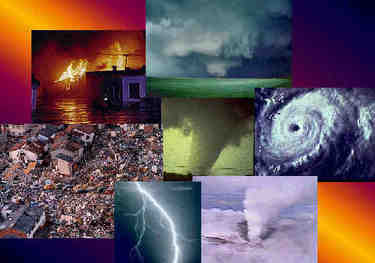
(AA) In the wake of the recent string of solar flares, some Americans--particularly Gulf Coast residents--may be wondering whether there are places in the U.S. that are safe from such natural disasters. The short answer? No. The Midwest may not be vulnerable to hurricanes, but twisters drop in regularly. Major earthquakes don't tend to strike New England, but strong winds can peel the roof off a northeastern house and snowstorms can shut down cities.
"Every location in the country is exposed to one disaster or another," says Wendy Rose, spokeswoman for the Institute for Business & Home Safety, a Tampa, Fla.-based nonprofit insurance industry group that aims to reduce losses from natural catastrophes. Still, some places are less susceptible than others to natural hazards. To get an idea where they might be, we partnered with Sperling's Best Places ( www.bestplaces.net), a data collection company based in Portland, Ore. Sperling's has compiled weather and disaster data for 331 metropolitan statistical areas in the U.S., and we used the information to discern the safest--and least safe--areas in which to live.
0 Comments
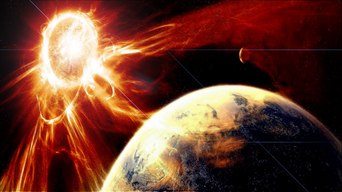 Were megaliths built to survive a comet impact? Were megaliths built to survive a comet impact?
By Martin Gray
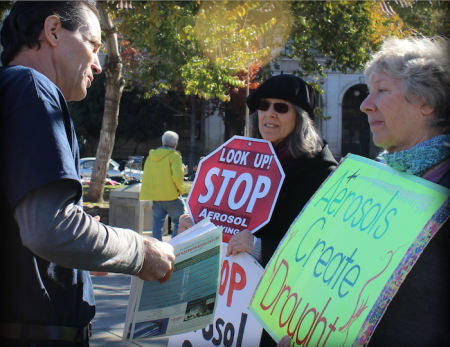
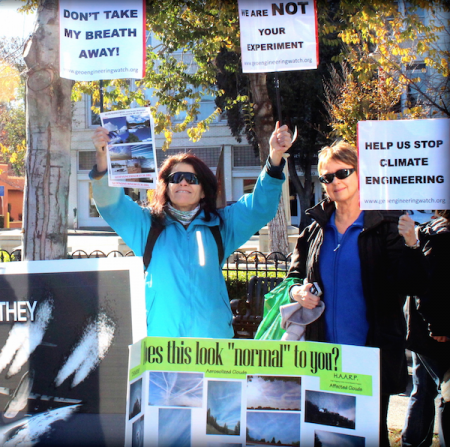
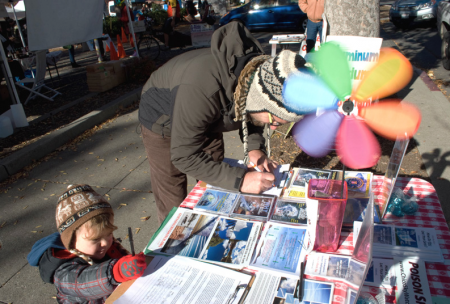
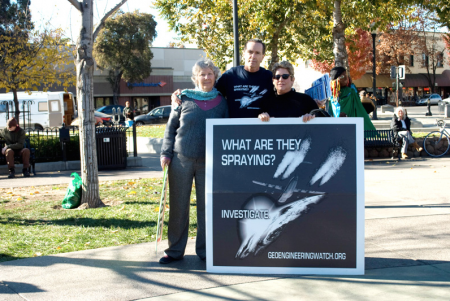
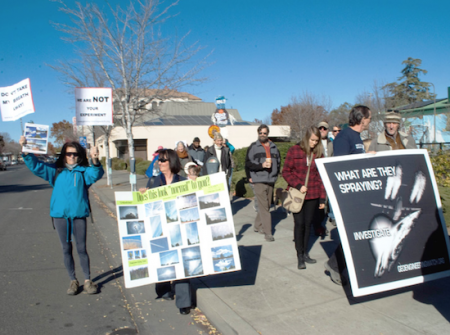
Early in the spring of 1986 I began a year-long pilgrimage around Europe by bicycle. Over four seasons I cycled through eleven countries to visit, study and photograph more than 135 holy places. In succeeding years I traveled to Europe several additional times, visiting other countries and their sacred sites. These travels took me to the sacred places of Megalithic Greek and Celtic cultures as well as to the pilgrimage sites of medieval and contemporary Christianity. For many thousands of years our ancestors have been visiting and venerating the power places of Europe. One culture after another has often frequented the same power places. The story of how these magical places were discovered and used is filled with myths of cosmic and cometary induced world destroying cataclysms, astronomers and sages, and nature spirits and angels. Misconceptions about the so-called Ice Age and its glacier coverage Before beginning our discussion of the megalithic use of power places in ancient Europe we should first address certain misconceptions regarding the cause of the transition between the Paleolithic and Neolithic eras. According to conventional beliefs (deriving from incorrect assumptions of the Uniformitarian theory of Charles Lyell and the Ice Age or glacial theory of Louis Agassiz in the early 1800's) enormous glaciers once covered vast regions of the northern hemisphere. These conventional beliefs state that the levels of the world's oceans were lower during the glacier age because of all the water supposedly frozen up in the polar ice cap. Between 13,000 and 8000 BC the vast glaciers melted and the levels of the world oceans rose by 120 meters. The effect of this glacial melting and sea level rise on archaic European life marked the end of the Paleolithic and the beginning of the Neolithic. This idea of a so-called Ice Age, with enormous glaciers covering vast areas of the northern hemisphere, has been debated by numerous scientific studies in the fields of geology, paleontology, biology, zoology, climatology, anthropology and mythology. Readers interested in learning more about these studies and their revelations regarding the Ice Age and its less-than-previously-assumed glacier coverage, as well as alternative dates for the occurrence of the Ice Age, will enjoy the books Cataclysm: Compelling Evidence of a Cosmic Catastrophe in 9500 BC, by Allan & Delair and Ice Age Civilizations, by James Nienhuis. The factual material presented in this scholarly book is slowly making its way into university courses and text books around the world, thereby rewriting our understanding of early Neolithic times. Cosmic and cometary induced cataclysms - 9500, 7640, 3150 and 1198 BC Prior to embarking on a discussion regarding the discovery and use of power places by humans during Neolithic times there is another - and critically important - matter that must be explored first. This concerns the pass-by and actual impact of cosmic and cometary objects at four distinct periods in the prehistoric past. To begin to explore this matter let us first refer to the enigmatic writings of the 4th century BC Greek philosopher Plato. In the Timaeus dialogues, these being a record of discussions between the Greek statesman Solon and an Egyptian priest, Plato report the following: "You Greeks are all children. You have no belief rooted in the old tradition and no knowledge hoary with age. And the reason is this. There have been and will be many different calamities to destroy mankind, the greatest of them by fire and water, lesser ones by countless other means. You remember only one deluge, though there have been many." What might these calamities be which Plato's Egyptian informants are referring to? Evidence has accumulated from a variety of scientific disciplines which demonstrate that a massive cosmic object (probably a portion of an astronomically-near supernova explosion) passed close by the earth in approximately 9500 BC. This cosmic event caused a worldwide cataclysm of enormous proportions, including massive shifting of the earth's surface, devastating volcanic activity, mega-tsunami waves, subsidence of regional landmasses, and mass extinctions of both animals and humans. In this regard it is vitally important to note that many of the geological and biological effects previously attributed to the hypothesized glacier movements of ice age times could NOT have been caused by the slow movement of ice but were in fact caused by the rapid and vast displacement of oceanic bodies of water (this being caused by the irresistible gravitational pull of the enormous cosmic object passing by the earth). Additionally, the species-wide animal extinctions caused by this event occurred far beyond the geographical boundaries set for the 'Ice Age glaciations' by orthodox theorists. The shifting of the earth's surface, termed crustal displacement by its primary theorist, Charles Hapgood, was also studied by Einstein who reported, "One can hardly doubt that significant shifts of the earth's crusts have taken place repeatedly and within a short time." To read more about the cosmic object pass-by and the ensuing crustal displacement of 9500 BC, refer to Cataclysm by D.S. Allan & J.B. Delair, The Atlantis Blueprint by Colin Wilson and Rand Flem-Ath, and Catastrophobia by Barbara Hand Clow. Approximately 2000 years later, in roughly 7640 BC, a cometary object sped towards the earth. This time, however, rather than passing by the earth as the cosmic object of 9500 BC had done, the cometary object actually entered the atmosphere, broke into seven pieces, and impacted the earth at known locations on the planet's oceans. The following map shows the general location of each of the seven impacts. [Please follow Apparently Apparel on Twitter, Facebook, Youtube, and check out our new AA toolbar!]  Dane Wigington geoengineeringwatch.org (December 5, 2015) Mainstream media sources are in so many cases completely omitting extremely dire news from the public and yet these same sources devote excessive coverage to absurd and irrelevent stories. A case in point is Northern California's "Record Searchlight" newspaper. The editor of this publication, Silas Lyons, completely blacked out any coverage whatsoever of the recent major anti climate engineering event in their hometown of Redding, California (even though CBS came all the way from Sacramento to cover the event). Though the Searchlight did find plenty of room in their newspaper to cover "Big Foot". The ongoing climate engineering programs are a real and present danger to the population. Media censorship of such critical information can only be considered criminal behavior. Once the geoengineering issue can no longer be hidden, and the population fully realizes that their media has been an accomplice to crimes which have irreparably harmed them, legal action should then commence against all guilty parties. Blind denial is also epidemic in the ranks of the environmental communities. On Saturday, November 28th, I attended a Global Climate March in Chico, California that was put on by 350.org. The photos below are of the anti-geoengineering activists that attended the march. An unfortunately high percentage of the 350.org marchers did not seem to want to know about the massive climate engineering elephant in the room that is mathematically the single greatest climate disrupting component (though of course there are many other factors). In the meantime, while so many choose to stay in their bubble comfort zones, the biosphere is collapsing, the global economy is disintegrating, and we are in free fall toward WWlll. We need everyone that is already awake to help in the effort to sound the alarm, each and every day. Once populations are forced to wake, a paradigm shift will follow. - DW
Editors Note: This was posted with consent by Dane Wigington. Please share on your blog as well. Please continue to the original article to read the comments. They are just as important as the broadcast. http://www.geoengineeringwatch.org/geoengineering-watch-global-alert-news-december-5-2015/ Check out our new page dedicated to GeoEngineeringWatch.org and raising awareness on the geoengineering issue. Posted by Apparently Apparel in Alternative, Chemtrails, Geoengineering, Life & Health Weather warfare is ramping up around the globe as the climate continues to disintegrate. NASA states on the record that "Earth is running out of water" but they will never mention the climate engineering insanity that is the core cause of expanding global drought conditions. The ongoing fracking insanity is poisoning much of our remaining ground water. Damage control measures are being implemented by an ever more desperate power structure that wants to hide reality for as long as possible. The recent "gag orders" placed on all National Weather Service employees and all National Oceanic and Atmospheric Administration employees are a glaring sign of this desperation. Those that agreed to accept the criminal cabal's oath of silence will be dealt with in the harshest imaginable fashion by agencies like the CIA and Homeland Security if they choose to tell the truth. Converging Catastrophes are closing in on us all. Who will continue to hide in the shadows? Who will stand and make their voice heard for the greater good? What will you do? Dane Wigington geoengineeringwatch.org (5:10PM PST) As Japan is riddled with back to back 6.9Mag quakes, solar activity continues at very low levels with no noteworthy solar flares detected during the past few days. The visible disk consists of only two visible numbered regions. Of these, region 2282 is a threat for minor C-Class solar flares. Old region 2268 from the previous rotation is expected to return off the east limb during the next 48 hours. It remains to be seen if visible sunspots are still associated with this region. No Earth directed coronal mass ejections were observed during the past day.
|

News Watch
Mind-opening news articles, editorials, videos & apparel that inspire our readers and help liberate them from the status quo. Stay informed.
Write For Us
Reach 1000's of readers daily!


You are not a product!
Space Watch
Top NewsNews Watch Categories
All
|


|
HAVE A TIP OR STORY TO TELL? JOIN TODAY & SHARE YOUR STORY!
If you have a breaking news tip or idea, please email: tips@apparentlyapparel.com Apparently Apparel® is a registered trade name and part of the ZOAT International® brands network. © 2007-2023. All Rights Reserved. Privacy Policy. All art & news content posted on this site is commentary or opinion and is protected under Free Speech. ApparentlyApparel.com is not responsible for content written by contributing artists, authors or news feeds. The information on this site is provided for educational and entertainment purposes only. It is not intended as a substitute for professional advice of any kind. ApparentlyApparel.com assumes no responsibility for the use or misuse of this material.
|
|